Signs Your House Painter Doesn't Know What They're Doing
Table of Contents
The Quote Itself Tells You Almost Everything
Most of the signs that a painter doesn't really know what they're doing show up before a single drop of paint hits your wall. The quoting process is a stress test. How a contractor scopes, communicates, and prices a job tells you almost everything you need to know about how they're going to execute it.
If you're considering hiring a painter in Nashville, the first place to look isn't the finished work in their portfolio — it's how they handle the conversation before they have your business.
Vague pricing and "we'll figure it out as we go"
A painter who really knows the trade can scope a residential job from photos and a brief description. They've done it hundreds of times. They know what a 12x14 bedroom with crown molding takes, what a kitchen with 30 cabinet doors takes, and what kind of prep a house with peeling exterior trim needs. When a painter can't commit to a fixed price, or keeps qualifying every line item with "depends on what we find," that's a sign of either inexperience or a setup for change orders later.
They have to come out before they'll quote
This one is trickier because it sounds professional — "we always come out and look at every job in person." In reality, an in-home estimate is often a sales tactic, not a technical necessity. For most residential interior and exterior projects, photos and measurements are more than enough to scope accurately. If a painter can't quote without driving over, ask yourself why. The answer is usually that they want a closer to sit on your couch and pressure you into signing.
Red Flags You Can See Before Work Starts
Once you've signed a contract, the prep stage is where pros and amateurs separate hard. A great paint job is 80% preparation. If a painter cuts corners here, the finish will fail no matter how expensive the paint is. Here are the warning signs to look for in the first day or two on the job.
No drop cloths, no plastic, no protection
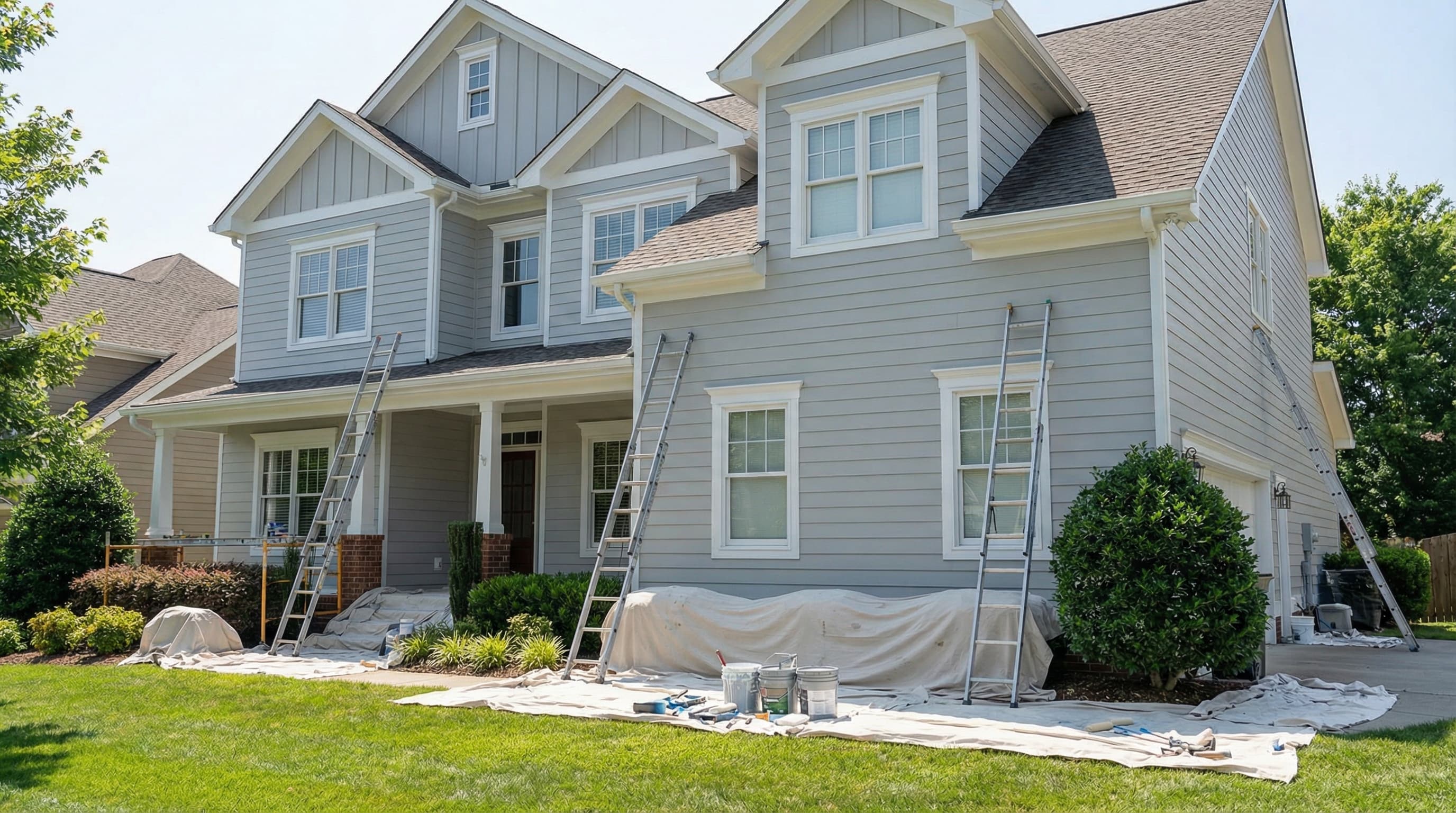
If your painter shows up with a roller, a tray, and not much else, you've got a problem. A real prep setup includes canvas drop cloths on the floor, plastic sheeting over furniture and fixtures, painter's tape on every clean line, and outlet/switch covers removed and bagged. A crew that walks into your living room and starts rolling without protecting anything is going to leave you with paint splatter on your hardwood and drips on your baseboards.
Skipping the sand-and-clean
Bare walls and trim need to be sanded smooth before paint goes on. Cabinets need to be degreased. Exterior surfaces need to be pressure washed and scraped. If your painter doesn't sand between coats on trim or cabinets, the finish will telegraph every flaw underneath. Watch for this — it's the easiest corner to cut and the most common one.
Wrong tools for the job
An experienced painter chooses the right tool for the surface. Cabinets get sprayed with airless sprayers (we use airless, not HVLP, for cabinet work). Walls get rolled with the right nap. Trim gets brushed with a high-quality angled sash. If you see someone trying to cut in a long stretch of crown with a chunky 3-inch wall brush, or rolling cabinet doors instead of spraying them, you're watching someone who doesn't know what they're doing.
Red Flags Once Painting Begins
Even if the prep looked solid, the application stage has its own tells. These are the signs that show up while paint is going on the wall.
One coat where two are needed
Most colors over a properly primed surface need two finish coats to look right and last. Light over dark almost always needs two. White ceilings over old yellowed ceilings often need two. A painter who tells you "one coat will be fine" is usually trying to finish faster, not save you money. The job will look thin, streaky, and patchy in raking light — and you'll see it the first sunny afternoon.
Lap marks, brush strokes, and roller stipple in the wrong places
On walls, you should see a uniform finish with no visible roller marks once the paint is dry. On trim and doors, a properly applied finish should be smooth — not a forest of brush ridges. On cabinets, a sprayed finish should look like a factory finish, not a rolled finish. When you see lap marks (the lines where one wet section met a dry section), that's bad technique. When you see heavy brush ridges on a door, that's a painter using cheap brushes or rushing.
Not back-rolling sprayed walls
If a painter sprays interior walls without back-rolling, you'll get a finish that doesn't hold up to scrubbing or wear. Back-rolling pushes the paint into the surface and gives you a uniform texture. Skipping it is a shortcut that becomes visible the first time you wipe a scuff off your hallway wall and the paint comes with it.
The Finish: What Bad Work Actually Looks Like
This is the most useful section if you're trying to evaluate work that's already done — either your own home or a portfolio you're reviewing before you hire.
What You See | What It Means | Should It Be There? |
|---|---|---|
Brush marks on doors and trim | Wrong brush, wrong technique, or wrong paint thinning | No |
Roller stipple on cabinet doors | Cabinets were rolled instead of sprayed | No |
Drip lines on baseboards or window sills | No drop cloth and no wipe-down | No |
Paint on hinges, light switches, or outlet covers | Hardware wasn't removed before painting | No |
Fuzzy lines where wall meets ceiling | Cut-in done freehand without a steady wrist or proper brush | No |
Visible patches under finish coat | Drywall repairs weren't sanded smooth or primed | No |
Color bleeding under tape lines | Tape applied to dirty or dusty surface, or pulled at wrong time | No |
Caulk lines that look gummy or cracked | Wrong caulk used, or applied over dirty seams | No |
None of these are unfixable, but they're all signs that whoever did the work didn't have the experience or didn't take the time. For a deeper look at what professional cabinet finishes should look like compared to amateur work, the Benjamin Moore Advance product page shows the kind of factory-quality smoothness a sprayed cabinet finish should have.
What Good Painters Do Differently
Now flip the lens. Here's what a painter who actually knows what they're doing looks like — both during the quote and during the work.
They scope the job clearly. The quote is itemized, the price is fixed, and you know exactly what's included before you sign.
They ask the right questions. Existing finish? Repairs needed? Sheen preference? Trim color? They're gathering the data they need to do the job right.
They protect the space. Drop cloths, plastic, tape, and a clean staging area on day one.
They prep before they paint. Sanding, patching, caulking, priming — done in the right order, and not rushed.
They use the right tools and the right paint. No rolling cabinet doors, no spraying without back-rolling on walls, no cheap brushes on trim.
They walk the job with you at the end. A real walkthrough — looking at every wall in the right light, fixing anything that isn't perfect.
The Painting Contractors Association (PDCA) publishes industry standards that lay out exactly what professional residential painting should include — it's a useful reference point if you want to compare what you're getting against what the trade considers correct.
Why Choose Those Guys Painting Co.
We've spent years building a process that catches every one of the issues above before they become a problem. Our quoting is done remotely from photos — no in-home sales visit, no pressure, fixed price within 24 hours. Our crews are painters, not salespeople. The person who scopes your job stays involved through the whole project, so nothing gets lost in a handoff.
If you've had a bad painting experience before — or you're trying to avoid one — that's exactly the situation we built this company to solve. Read more about our team and how we work, or browse our residential interior painting services and cabinet painting services to see what's included.
Get a Fixed-Price Quote in 24 Hours
Hiring the right painter shouldn't require interviewing five different companies and sitting through a sales pitch in your living room. Fill out the form below — photos of your project and a brief description is all we need. Fixed-price quote within 24 hours.
Frequently Asked Questions
How can I tell if a painter is cutting corners on prep?
Watch for skipped sanding, no drop cloths, no taping, and a fast jump straight to rolling. A real prep day usually takes longer than the painting itself. If a painter shows up and starts applying paint within an hour of arriving on a multi-room interior job, prep was almost certainly skipped.
Should a painter come to my house before quoting?
Not necessarily. Experienced painters can quote most residential jobs accurately from photos and measurements. In-home estimates are often a sales tactic. We deliver fixed-price quotes within 24 hours from photos — no in-home visit required.
What's the most common mistake amateur painters make?
Skipping prep. Sanding, patching, caulking, and priming are unglamorous and time-consuming, but they're what make a finish look smooth and last for years. An amateur jumps to the paint because the paint is what looks like progress. A pro spends 80% of the time on prep.
How do I evaluate a painter's portfolio?
Look at edges and details, not the wide-angle 'after' shots. Cut-in lines, trim-to-wall transitions, cabinet finish smoothness, and how clean the hardware looks all tell you whether the work was done with care. If every photo is shot from across the room, that's worth noticing.
What if I've already hired a painter and I'm seeing red flags?
Talk to them directly and document specific concerns with photos. A good painter will own the issue and fix it. If they get defensive or vague, that confirms what you're seeing. Stop work, document everything, and don't make the final payment until the work meets the standard you agreed to.