Limewash Paint Nashville TN: Walls, Brick & Interior Looks
Table of Contents
What Is Limewash Paint?
You've probably seen it on Instagram — walls with a soft, chalky, almost hand-rubbed finish that looks like it belongs in a Tuscany farmhouse. That's limewash, and it's showing up in Nashville homes at a fast clip. Interior designers love it. Homeowners who want something beyond flat paint are asking about it constantly.
We've done enough limewash projects around Nashville to have real opinions on when it works beautifully, when it's overkill, and what it actually takes to apply it right. This guide covers all of it — so you can decide whether it makes sense for your home before you fill out the form below and get a fixed-price quote.
Limewash is made from slaked lime (calcium hydroxide) mixed with water and pigment. It's one of the oldest wall finishes in the world — used in Mediterranean and European architecture for centuries — and it creates a matte, semi-translucent finish that looks completely different from standard latex or acrylic paint.
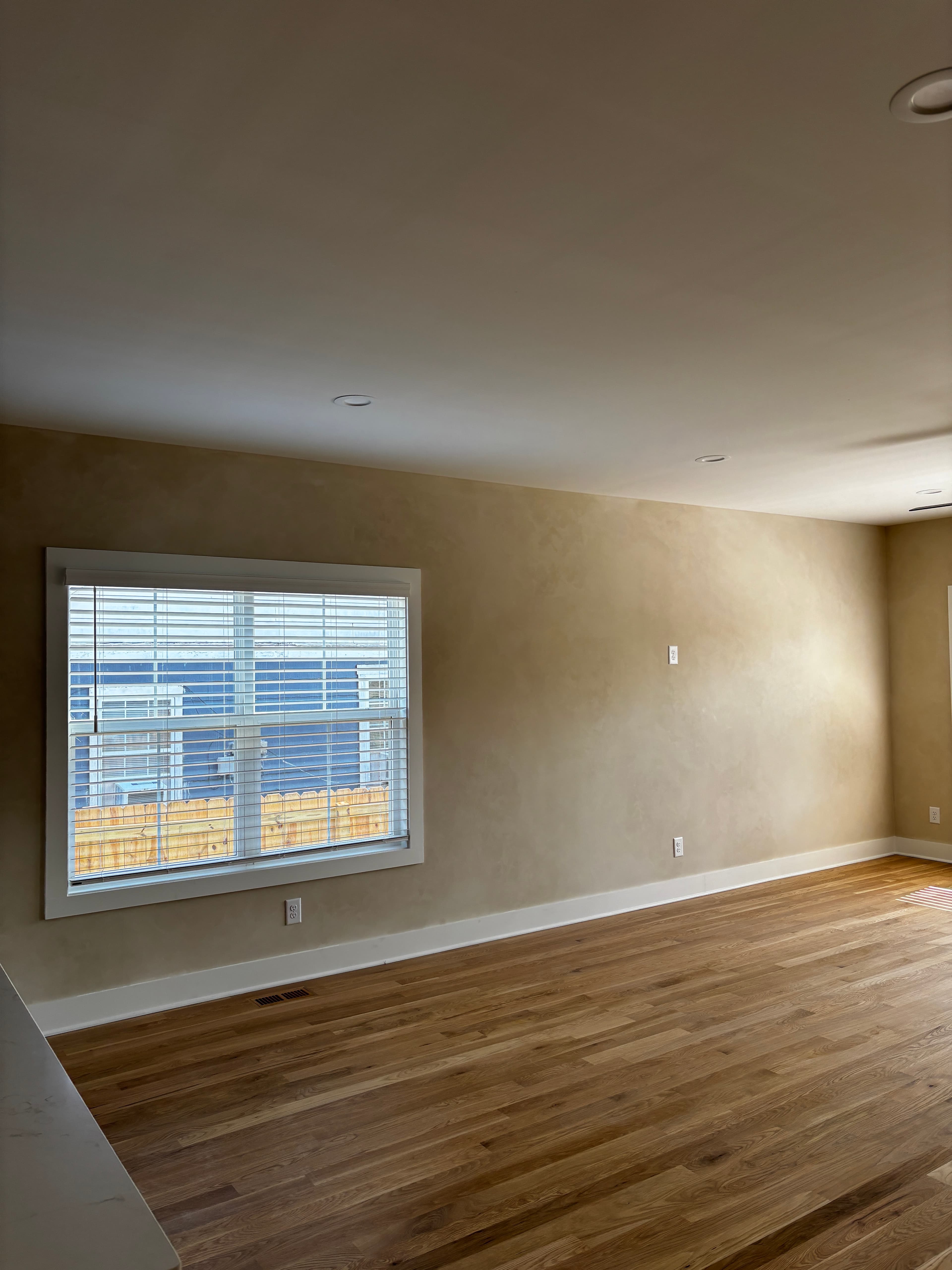
The key characteristic of limewash is its depth. Because the finish is semi-transparent, light interacts with it differently at different angles and times of day. A wall can look warm and moody in the evening and soft and airy in morning light. That live quality is what people are after when they choose it.
We use Meoded limewash products exclusively — our team has gone through Meoded's professional training, so we know the product's behavior, application requirements, and how to get consistent results across large wall surfaces. It's not a product we picked up at the paint store; it's one we've been trained on.
Limewash vs. Regular Paint: What's the Difference?
Feature | Standard Latex Paint | Limewash |
|---|---|---|
Finish | Flat, eggshell, satin, semi-gloss | Matte, chalky, textured |
Look | Solid, uniform color | Variegated, layered, aged |
Application | Roller or brush, one direction | Cross-hatch brush technique, multiple passes |
Surfaces | Drywall, plaster, wood, most surfaces | Best on drywall, plaster, masonry, brick |
Durability | Washable, scrubbable | Less scrub-resistant; patina develops over time |
Cost | Lower material cost | Higher material + more labor-intensive |
Reversibility | Easy to repaint over | Can be painted over with proper prep |
Where Limewash Works Best in Nashville Homes
Interior accent walls
The most common use we see in Nashville is a single limewashed accent wall — usually in a living room, primary bedroom, or dining room. The variegated finish gives the wall visual presence without competing with furniture or artwork. It's a strong move when the rest of the room is fairly neutral.
Brick fireplaces and fireplace surrounds
Limewash on brick is exceptional. The product soaks into the porous surface and creates a soft, whitened effect that still lets the brick texture show through. Nashville homes with 1960s–1980s red brick fireplaces that feel dated are natural candidates. It's a dramatic update without ripping anything out.
Full-room applications
For homeowners who want the full Mediterranean feel — all four walls, maybe the ceiling — limewash can be stunning. It's most effective in rooms with natural light, architectural character, or high ceilings. Open-concept living areas in newer Nashville builds can feel too flat; this is one finish that adds real dimension.
Exterior masonry
True lime-based limewash is a traditional exterior finish, particularly for brick and concrete block. It's breathable, which is actually better for masonry long-term than film-forming paints. This is a niche application but worth knowing about if your home has unpainted brick exterior.
What Limewash Doesn't Work On
Limewash is not a universal replacement for paint. There are surfaces and situations where it's the wrong call:
Kitchens and bathrooms — High-moisture areas are tough. Limewash is less resistant to scrubbing and moisture than standard paint with a satin or semi-gloss sheen. It can work in a dry, well-ventilated kitchen as an accent, but we'd steer you away from it near a stove or shower.
Smooth vinyl or previously painted high-gloss surfaces — Limewash doesn't bond well to slick surfaces without significant prep. Painted high-gloss walls need to be sanded and primed before we can apply limewash.
High-traffic rooms — If you have kids who touch walls or pets, a standard eggshell or satin is more practical. Limewash is a finish for spaces that see lighter traffic.
The Prep Work: Why Meoded Quartz Primer Matters
One thing that separates a limewash job that looks right from one that doesn't: the primer. We use Meoded Quartz Primer on every limewash project — it's the correct foundation for Meoded limewash products and creates the surface profile the topcoat needs to adhere and develop its texture properly.
On standard drywall, Quartz Primer provides the grip that keeps the limewash from pulling away at the edges during the multi-pass application. On previously painted surfaces, it bridges the existing finish and gives the limewash something to bite into. Skipping it — or using a generic primer — changes how the product behaves and affects the final appearance. It's not optional on our jobs.
This is one reason we'd push back on anyone who wants to DIY limewash using a primer they picked up at a hardware store. The Meoded system is designed to work together, and we've seen what happens when pieces of it get substituted out.
Why Technique Matters as Much as Product
Even with the right product and primer, application technique is where most limewash projects go sideways. The cross-hatch brush stroke, managing wet edges, knowing when to add water to thin the product mid-wall — these are skills built through repetition and proper training, not YouTube tutorials.
A limewashed wall that's been applied unevenly or patched incorrectly is noticeable. The whole appeal of the finish is its intentional, controlled variation — not accidental blotches from rushed technique or the wrong brush. Our team uses the brushes and methods specified in Meoded's training and works in sections to keep edges live and transitions seamless.
Our interior painting team handles all limewash work in-house. No subcontractors, no one-off hires for specialty work. If you want to see past results, we're happy to share photos from completed projects across our Nashville service area.
How We Quote Limewash Projects
We quote limewash the same way we quote every project: you submit photos, we price it — fixed cost, no in-person visit required. For limewash specifically, helpful photos include:
The surface to be treated (all four walls, or the specific accent wall or fireplace)
The room's current paint colors and light sources
Any inspiration photos you're working from
Fill out the form below — photos of your project and a brief description is all we need. Fixed-price quote within 24 hours.
Why Choose Those Guys Painting Co.
We're a Nashville-based painting company with a simple model: you send photos, we send a fixed price, our painters show up and do the work right. No salespeople. No surprise change orders. No disappearing after the deposit clears.
For specialty finishes like limewash, that model matters even more. You're trusting us with a wall finish that shows every inconsistency. We've completed Meoded's professional training, we use the full Meoded system on every job, and we have the track record to back it up. Read more about how we operate at our About page.
Ready to get a quote?
Fill out the form below — photos of your project and a brief description is all we need. Fixed-price quote within 24 hours.
Frequently Asked Questions
Is limewash paint the same as whitewash?
They're related but not identical. Traditional whitewash is a thin, diluted lime mixture used primarily on wood and masonry. Modern limewash products like Meoded offer better pigment control, more color range, and improved adhesion compared to basic whitewash. The visual effect is similar — soft, aged, semi-transparent — but professional limewash products deliver more consistent, durable results.
How long does limewash paint last?
On interior walls with normal traffic, a professionally applied limewash finish typically lasts 7–10 years before needing a refresh. The finish develops a natural patina over time, which many homeowners prefer. On brick, it can last significantly longer since it bonds to the masonry rather than forming a surface film.
Can you paint over limewash later?
Yes. Limewash can be painted over with standard latex paint, but it requires proper prep — typically a bonding primer to ensure adhesion. If you think you might want to revert to standard paint in a few years, just let us know upfront so we can factor that into the approach.
Does limewash work on drywall, or only brick and plaster?
Meoded limewash products are formulated to work on drywall, plaster, and masonry. Most Nashville homes have standard drywall interiors, and with proper preparation — including Meoded Quartz Primer — the finish performs beautifully. The technique differs slightly from masonry application, but the visual result is just as good.
How is limewash priced compared to regular paint?
Limewash projects cost more than standard paint jobs — both for materials and labor. The product itself is pricier, and the multi-coat cross-hatch application is more time-intensive than rolling standard paint. The exact cost depends on your surface and square footage. Submit photos and we'll give you a fixed price within 24 hours.